In Barcelona, a recent motorcycle can ride through the low emission zone without restriction, but it now parks on the road rather than on the pavement. Across Spain, gloves, closed footwear and a high-visibility vest on board have been compulsory since 1 October 2026. Here are the rules to know before you ride, with their official sources.
Does the Barcelona low emission zone apply to your motorcycle?
Almost certainly not if your motorcycle is recent. The Rondes de Barcelona low emission zone (ZBE) only bans motorcycles and mopeds older than the Euro 2 standard, usually those registered before 2003. The restriction applies on weekdays, Monday to Friday, from 7 am to 8 pm, inside the ring roads and in several neighbouring towns.
The official zbe.barcelona site lists the vehicles affected. A motorcycle registered in Spain carries the DGT environmental sticker, which is enough. A bike registered elsewhere, in France or the UK for example, has no such sticker, so it must be registered once, before entering the zone, on the AMB metropolitan register, with the registration document and the Euro level of the vehicle.
According to the official site, a compliant vehicle that has not been registered can be fined from €200. A motorcycle below Euro 2 can apply for up to 24 day passes a year.
Can you park a motorcycle on the pavement in Barcelona?
As a rule, no. Spanish traffic law reserves pavements for pedestrians and lets each city set exceptions for two-wheelers. Barcelona's ordinance on pedestrian and vehicle traffic, in force since February 2025, makes the road the default: motorcycles park in the bays marked for two-wheelers, painted on the carriageway.
Pavement parking is now an exception, limited to wide pavements, with a clear path left for pedestrians, and never outside a school or a hospital. The safest approach is to treat the pavement as off limits unless a marking allows it. Articles 152 and 156 of the General Traffic Regulations set the principle, and the details are in the city council's guide.
What motorcycle gear is compulsory in Spain?
Since 1 October 2026, rider and passenger must wear a fastened helmet approved to UNECE R22 and closed footwear covering the whole foot on every road. Protective gloves are compulsory outside built-up areas. The motorcycle must also carry a high-visibility vest, to be worn if you stop on the hard shoulder of an interurban road.
These rules come from Royal Decree 518/2026 of 24 June, which amends the traffic code. A later order will set technical specifications for gloves; until then, the decree asks for protective gloves similar to those in use today, so the obligation already applies.
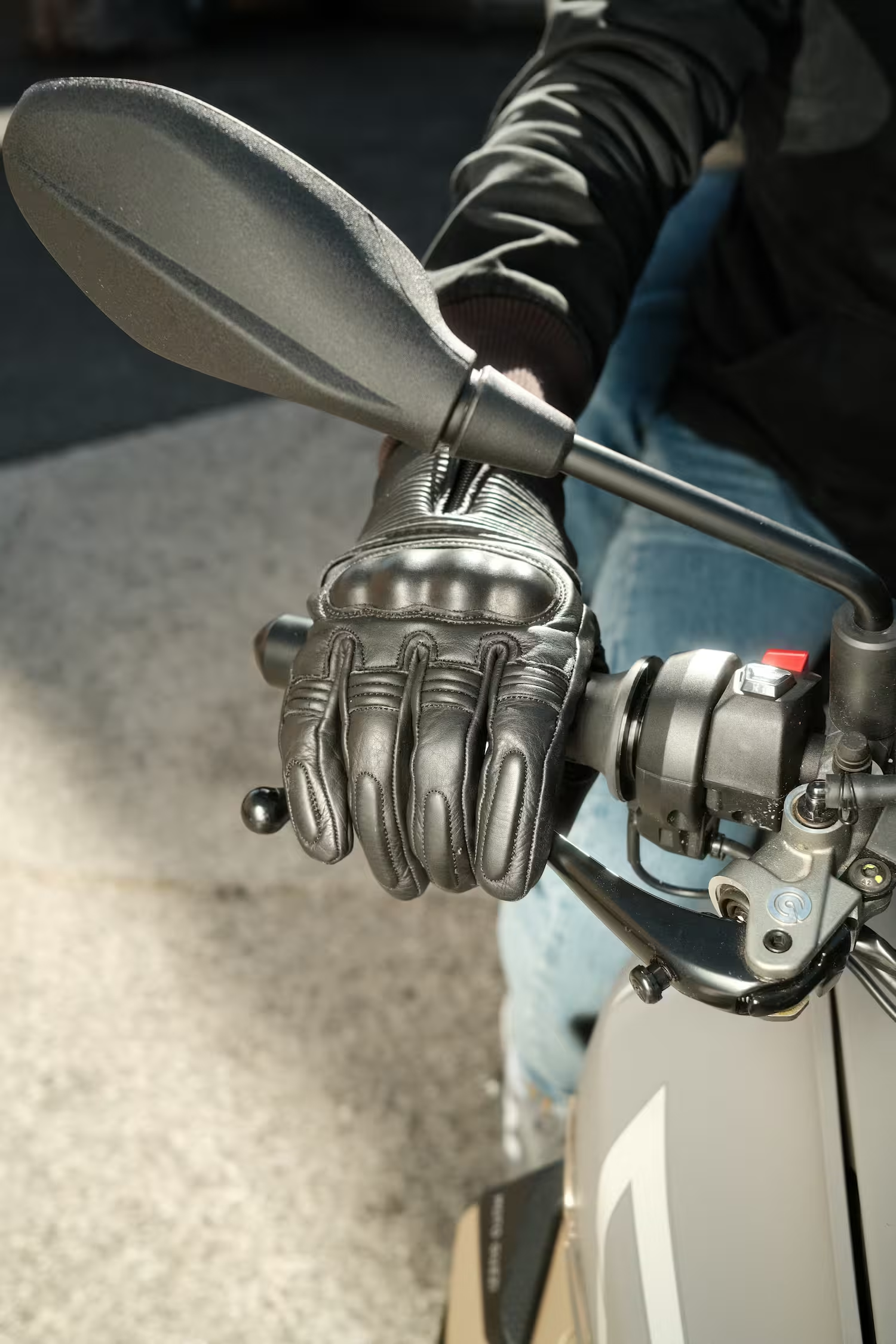
The V-16 warning light, compulsory in cars, does not apply to motorcycles: Annex XII of the vehicle regulations requires it for cars and light vans only, and asks motorcycles for the vest alone. At Good Motors, helmet and gloves are an option at €5 a day on 125s and A2 motorcycles, and included on full A licence motorcycles. The vest is not listed in the equipment provided, so bring your own.
Which licence do you need to ride a motorcycle in Spain?
A licence issued in the European Union or the European Economic Area is valid in Spain for as long as it is in date. A UK photocard licence is also valid for a visit. With a US licence, or any licence not written in Spanish, the Spanish traffic authority (DGT) advises carrying an International Driving Permit.
The DGT accepts foreign licences written in Spanish or with an official translation, and recommends getting the IDP in your home country before travelling. It is always shown with your passport and original licence. For UK riders, GOV.UK confirms the photocard licence is valid, provisional licences are not, and you must be 18 to ride a motorcycle over 125cc.
The category matters as much as the country: the A2 licence is limited to 35 kW (47.5 hp), while the full A licence covers any power. Our rental conditions are in the FAQ: EU-format licences are accepted, and outside the EU you need a passport plus a licence in French, with an official translation or with an IDP, except for UK licences. You remain solely responsible for your right to ride in each country you cross.
Which traffic rules differ from the UK and the US?
Spain drives on the right. Motorcycles must keep dipped headlights on during the day on every road. The alcohol limit is 0.5 g/l of blood, and 0.3 g/l during the first two years after passing your test. Lane filtering between cars is not permitted under Spanish law.
The General Traffic Regulations set the motorcycle limit at 120 km/h (about 75 mph) on motorways and dual carriageways and 90 km/h (about 56 mph) on other roads. In towns, the limit is 50 km/h on roads with two or more lanes each way, 30 km/h with one lane each way, and 20 km/h on single-level shared streets. Since 1 October 2026, motorcycles may use the hard shoulder only on signposted stretches, when traffic has stopped, at no more than 30 km/h and in single file.
Carry your licence, ID, registration document and insurance certificate. Police can issue on-the-spot fines; paid within 20 days, they are halved. With a motorcycle rented in France, riding abroad is allowed in the European Economic Area, Andorra, Monaco, Liechtenstein, the Vatican and San Marino; cover is detailed on the insurance page, and the rental always ends at a Good Motors location.
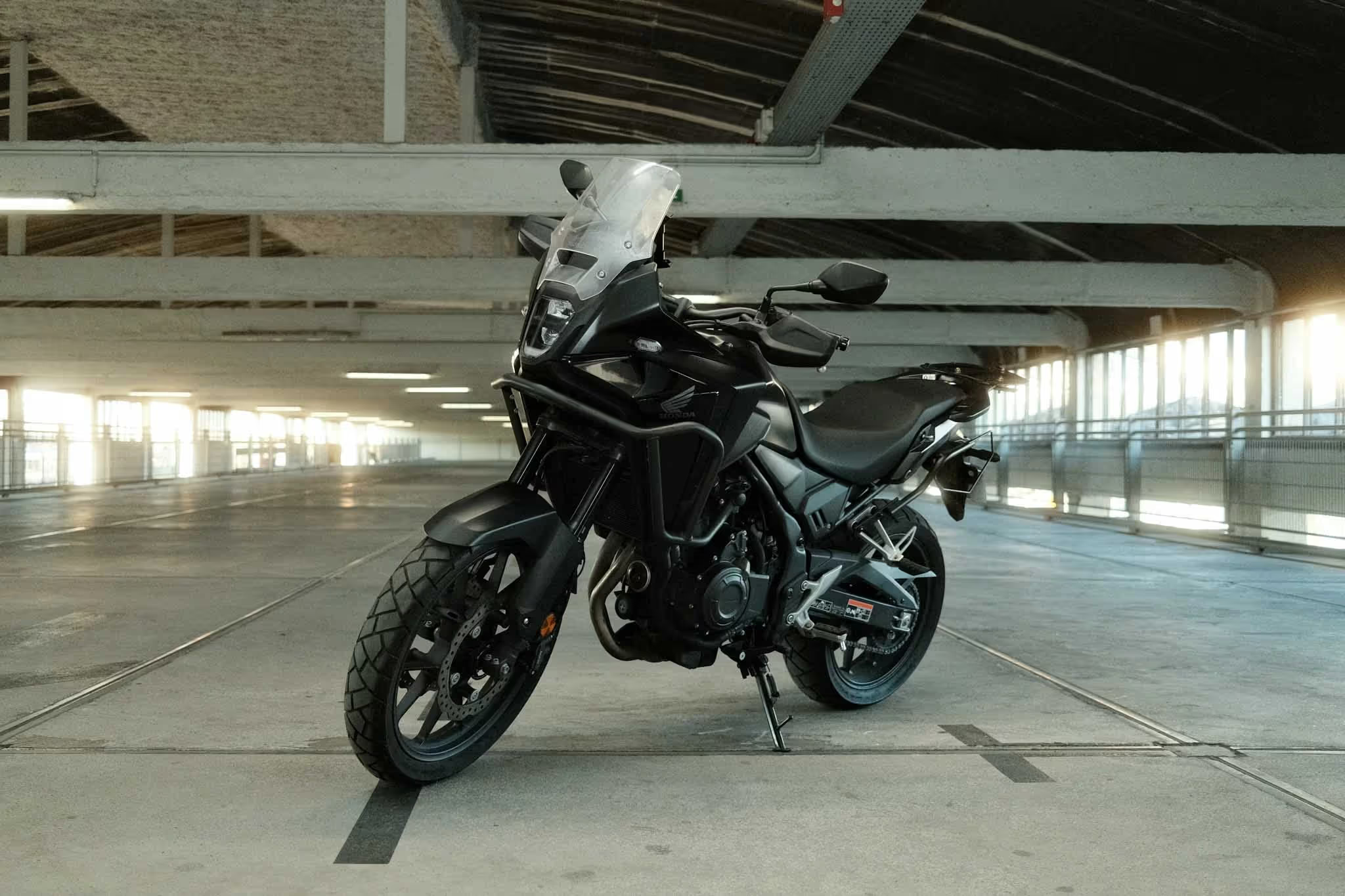
To leave Barcelona for the roads of Catalonia, a versatile adventure bike such as the Honda NX500 or the Royal Enfield Himalayan, both A2, suits this kind of road.
The rules at a glance
| Obligation | Rule | Source |
|---|---|---|
| Helmet | UNECE R22 approved, fastened, on every road | RD 518/2026, art. 118 RGC |
| Gloves | Protective gloves outside built-up areas | RD 518/2026, art. 118 RGC |
| Footwear | Closed, covering the whole foot, on every road | RD 518/2026, art. 118 RGC |
| High-visibility vest | Carried on the motorcycle, worn when stopped on an interurban hard shoulder | Annex XII RGV, art. 118 RGC |
| V-16 warning light | Not required on motorcycles | Annex XII RGV |
| Lights | Dipped headlights on during the day | Art. 104 RGC |
| Alcohol | 0.5 g/l of blood, 0.3 g/l for licences under two years | Art. 20 RGC |
| Barcelona ZBE | Euro 2 minimum on weekdays 7 am to 8 pm; prior registration for foreign bikes | zbe.barcelona, AMB |
| Parking | On the road; pavement only where allowed | Art. 156 RGC, Barcelona ordinance |
| Non-EU licence | In Spanish, official translation or IDP advised | DGT, GOV.UK |
Frequently asked questions
Are motorcycle gloves compulsory in Spain?
Yes, outside built-up areas, since 1 October 2026. Royal Decree 518/2026 requires protective gloves for rider and passenger on interurban roads. In town the decree does not require them, but we recommend keeping them on. A later order will define their specifications; standard motorcycle gloves are fine in the meantime, so pack a pair before you set off.
Can a UK or French registered motorcycle enter the Barcelona ZBE?
Yes, if it meets at least the Euro 2 standard, which any recent motorcycle does. As it has no DGT sticker, it must be registered once on the AMB register before entering the zone on weekdays between 7 am and 8 pm. Riding in without registering can lead to a fine.
Do I need an International Driving Permit to ride in Spain?
Not with an EU licence or a UK photocard licence. With a US licence, or any licence not written in Spanish, the DGT recommends an International Driving Permit, obtained in your home country before you leave. It is carried with your passport and original licence and never replaces them.
Is lane filtering legal in Spain?
No, Spanish law does not permit it. The only recent exception concerns the hard shoulder: on signposted stretches, when traffic has stopped, a motorcycle may use it at up to 30 km/h in single file. Everywhere else, stay in your lane, including in the queues on Barcelona's ring roads.
The Barcelona departure point will open soon on Passeig de Gràcia, in the Eixample. In the meantime, browse the motorcycle range to find the one that matches your licence.